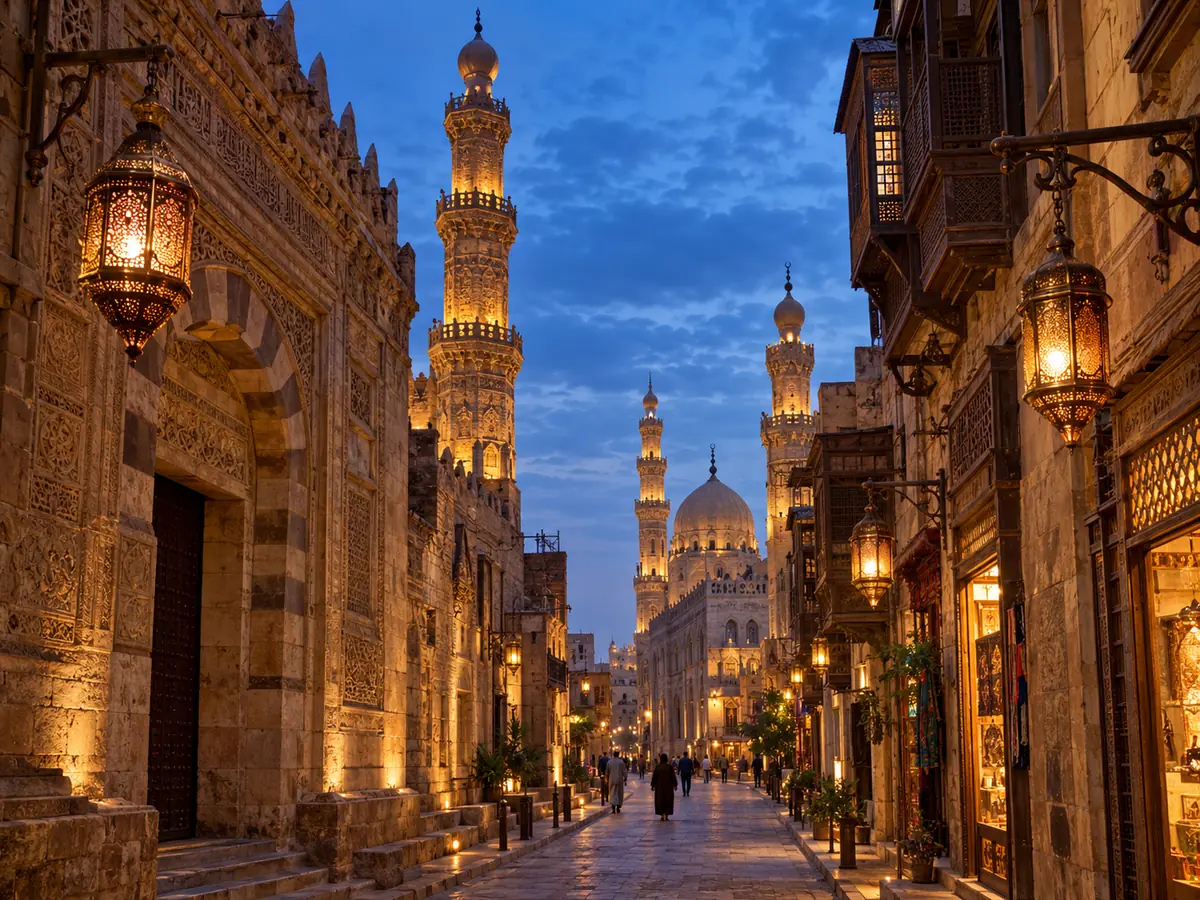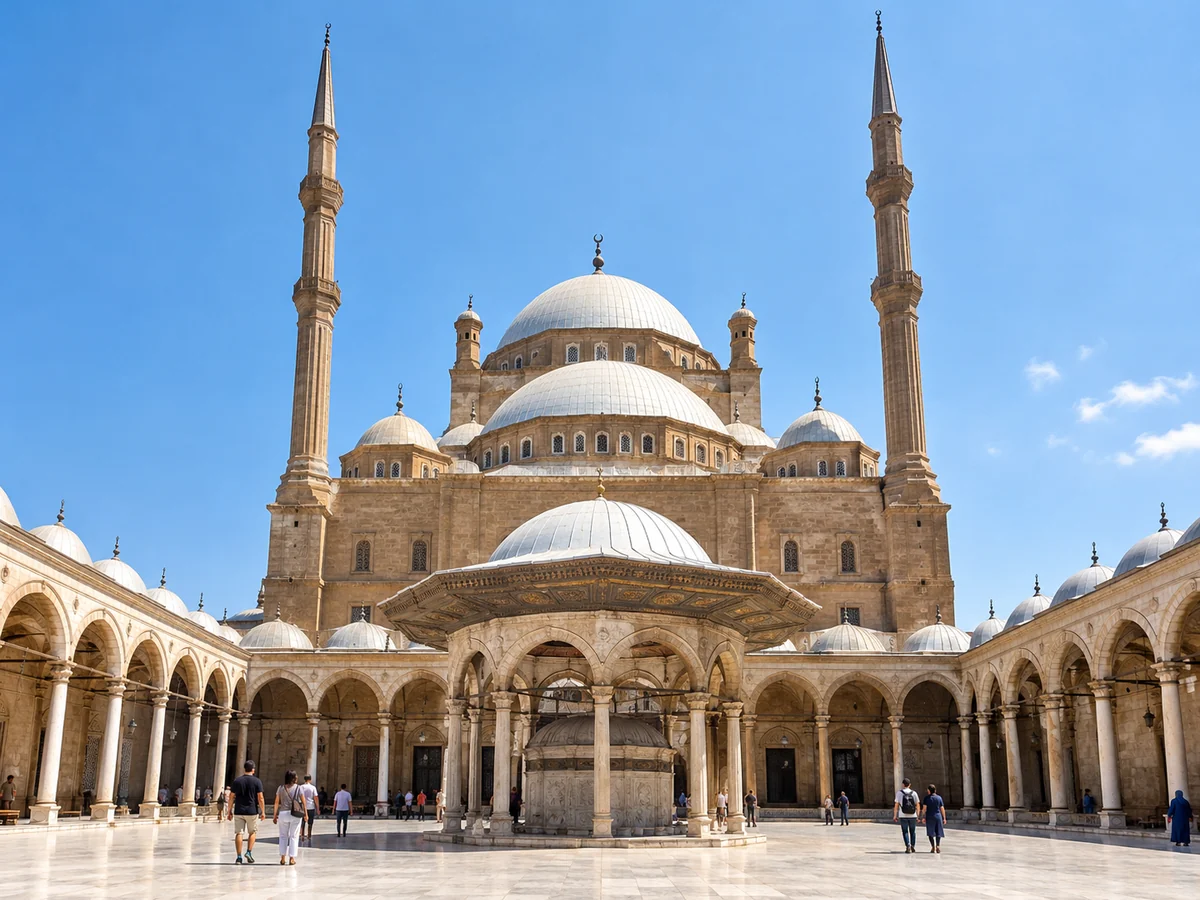
Booking choice: The Islamic Cairo walk with Al-Azhar, from $25 per person in a group. Check dates Tour details
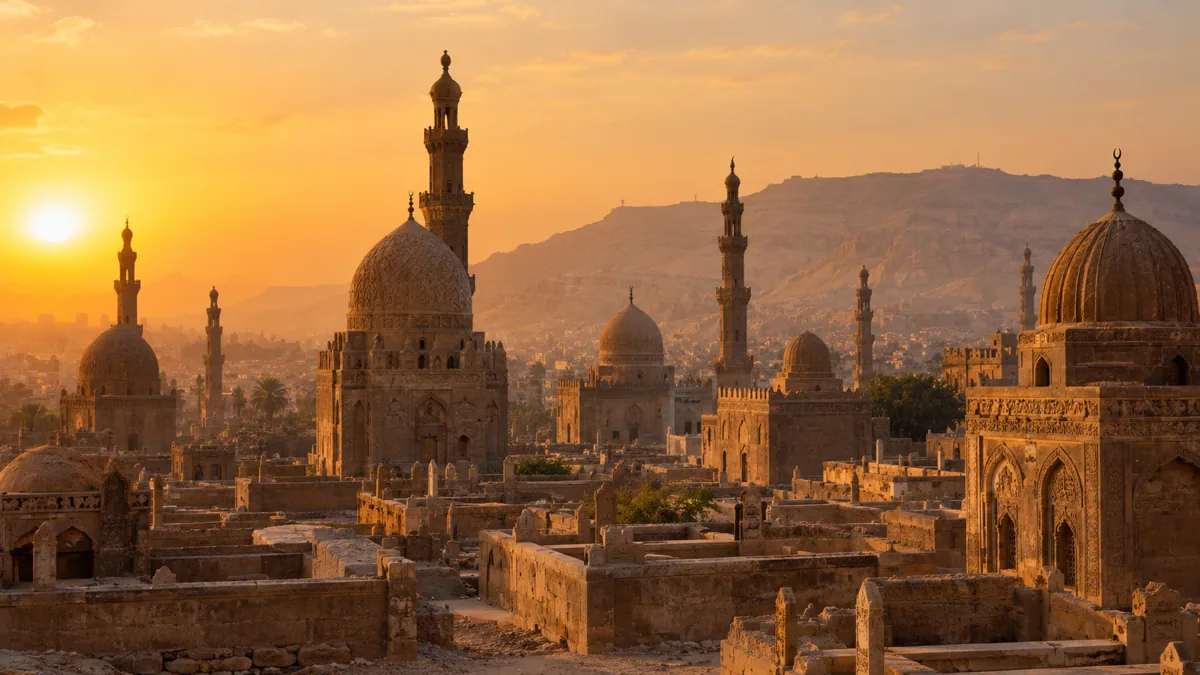
The City of the Dead, or al-Qarafa, is a belt of cemeteries about 6 km long east and south of the Citadel. Families still bury their dead here, people live among the tombs, and some of Cairo's finest Mamluk architecture stands in it. UNESCO counts it as part of Historic Cairo, inscribed in 1979.
None of the tours on this site goes into the cemeteries. But you drive past the cleared areas on the way to the Citadel, and many readers ask what happened. This post sticks to what established outlets have reported.
The quick answer
Since 2020 the government has cleared thousands of graves, most of them 19th and early 20th century, for a road network linking central Cairo with the New Administrative Capital. Clearances have hit the Imam al-Shafi'i area, al-Qarafa al-Sughra, the cemeteries around Sayyida Nafisa and the Bab al-Nasr cemetery. UNESCO has raised concerns; the government says registered antiquities stay. The big monuments visitors see are untouched.
What has been demolished in Cairo's historic cemeteries since 2020?
Tombs and family enclosures in several cemeteries, cleared in waves since 2020 for new highways, a flyover and road widening. Most were not registered monuments.
In 2020 the government decided to build a network of roads and bridges through the area to connect central Cairo with the New Capital, about 60 km east, The Conversation reported in April 2026. A first flyover went across the Southern Cemetery near Imam al-Shafi'i. By September 2023, around 2,000 tombs had been earmarked for an extension of the Yasser Rizk overpass, according to the Atlantic Council.
Work has stopped and started. Demolitions in the Imam al-Shafi'i area were paused in early September 2023 after a public outcry, and some were halted again in 2024 in parts of the Northern Cemetery, Bab al-Nasr and Sayyida Aisha, before resuming later that year. In 2022 the authorities backed away from demolishing the tomb of the writer Taha Hussein after a public backlash; a new flyover now runs above it.
| When | What was reported | Source |
|---|---|---|
| 2020 | Road and bridge network through the cemeteries begins; first flyover across the Southern Cemetery | The Conversation, 2026 |
| 2022 | Order to demolish Taha Hussein's tomb withdrawn after backlash | Atlantic Council, 2023 |
| Sept 2023 | About 2,000 tombs earmarked; work paused in Imam al-Shafi'i | Atlantic Council, 2023 |
| 2024 | About 13,000 m2 of the Bab al-Nasr cemetery razed; some works paused | Mada Masr, 2025; The Conversation |
| April 2025 | New clearances in Bab al-Nasr; second road cut through al-Qarafa al-Sughra | Mada Masr; Bab Misr, 2025 |
| Late 2025 to 2026 | Clearances continue around Sayyida Nafisa and al-Qarafa al-Sughra | Press reports, late 2025 |
Which areas are affected: Sayyida Nafisa, al-Qarafa al-Sughra, Bab al-Nasr?
The Southern Cemetery around Imam al-Shafi'i and Sayyida Nafisa, the stretch called al-Qarafa al-Sughra, and the Bab al-Nasr cemetery just north of the Fatimid walls.
The Southern Cemetery is the oldest, dating back to the founding of Fustat in 642. The Egyptian heritage site Bab Misr described in April 2025 how the Civilizations Axis road first split al-Qarafa al-Sughra in two around 2022, and how a new Salah Salem road was cutting a second path through it. It listed 19th-century family tombs lost in that phase, among them the dome of Abd al-Halim Pasha, which The Conversation also names. By late 2025, press reports described the old tombs around Sayyida Nafisa and the northern part of al-Qarafa al-Sughra as largely gone.
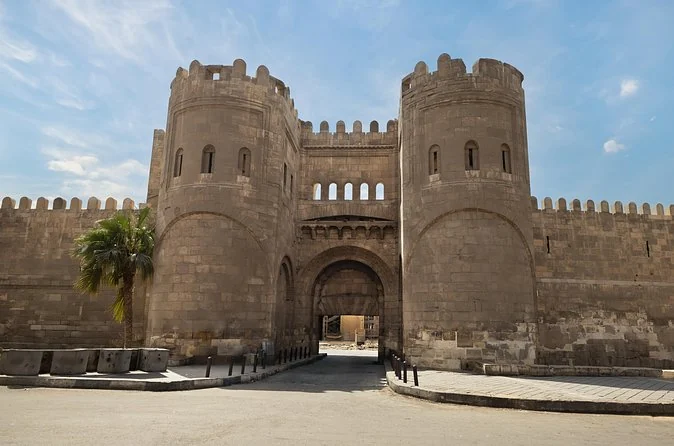
North of the old city, Mada Masr reported that about 13,000 square metres of the Bab al-Nasr cemetery were razed in 2024 and that a new round began in April 2025, to make room for a parking garage and a shopping centre. This is the cemetery right outside the Bab al-Nasr gate at the top of Al-Muizz Street.
The Sayyida Nafisa Mosque itself was renovated and reopened in 2023, and the Mamluk complexes of the Northern Cemetery, Qaytbay among them, are registered monuments.
What do UNESCO and the Egyptian government say?
UNESCO has said it is in contact with the authorities to reconcile the projects with World Heritage protection. The government says the roads serve the public interest and that registered antiquities will remain intact.
The government's position, as reported by the Atlantic Council, is that it is developing the road network and removing slum areas "in the public's interests", and that "antiquities in Historic Cairo [...] will remain intact". Officials present the roads as overdue infrastructure upgrades.
UNESCO said its experts were "in contact with the Egyptian authorities to reconcile the planned urban development projects with the necessary World Heritage Protection", and has asked for more information. Conservationists point out that most tombs are not registered as antiquities: Reuters reported in 2023 that only 102 of about 2.5 million tombs carry that status, which leaves the rest without legal protection. Families have been told to move remains to a new cemetery in the satellite city of 10th of Ramadan.
Both sides agree on one point: the registered monuments, the big domed mausoleums you see in photographs, are not the ones coming down.
Can you still visit the City of the Dead in 2026?
Yes, parts of it. The Northern Cemetery's Mamluk complexes, Qaytbay above all, still stand. Go with a local guide and remember that people live and mourn here.
The cemeteries are not a sightseeing park. They are a working burial ground and a neighbourhood. If you go, go in daylight with someone who knows the area, dress as you would for a mosque, and don't photograph funerals, exhumations or residents without asking. Expect building sites, cleared ground and new road embankments in places that looked very different a few years ago.
Parts of the Southern Cemetery are now cut off by the new roads, and routes change as works move. A driver who knows the current layout saves a lot of time.
Does any Old Cairo tour go to the cemeteries, and will you notice the works?
No tour on this site visits the cemeteries. You will see the new flyovers and road works on the drive to the Citadel, and the Bab al-Nasr cemetery lies just outside the walls at the top of Al-Muizz.
The Citadel's entrance is on Salah Salem road, which runs between the Southern and Northern Cemeteries. Any private tour that goes there uses these roads, including the 4-hour tour and the private Citadel day. Ask your guide about it; most have an opinion.
On foot, the Islamic Cairo walk with Al-Azhar by Deluxe Travel covers Al-Muizz Street, Khan el-Khalili and Al-Azhar Mosque inside the old walls. It is not private by default (a walking option for up to 12, plus car options), and the Al-Muizz admissions are not included: budget EGP 220 for the unified ticket. One 4-star review mentions no toilet or food stop, so eat before you start. The $25 from-price is a per-person group rate on the cheapest option; smaller parties pay more per head.
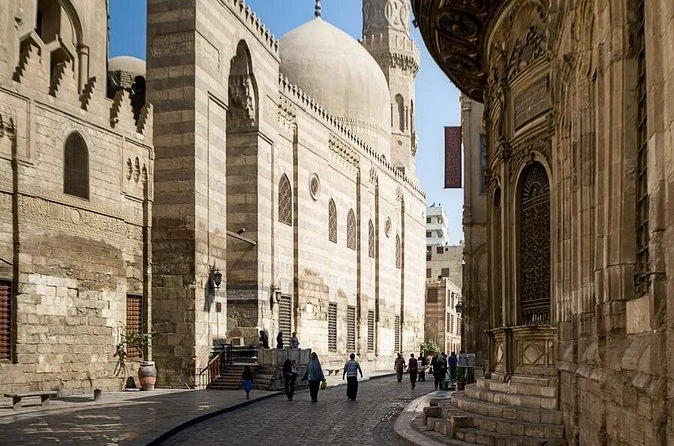
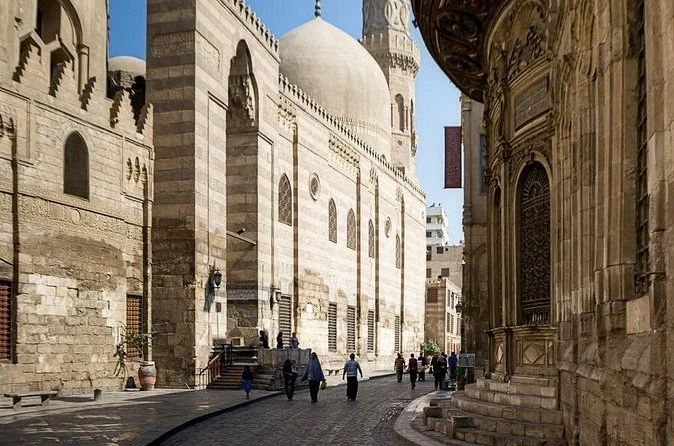
A slow day on foot through medieval Cairo, from Al-Muizz Street to the marble courtyard of Al-Azhar.
Explore the Islamic Cairo walk with Al-Azhar Tour detailsFrequently asked questions
Is the City of the Dead being demolished?
Parts of it. Since 2020 thousands of mostly 19th and 20th-century tombs have been cleared for roads, with work paused and restarted several times. Registered monuments such as Qaytbay still stand.
Is the Sultan Qaytbay complex still there?
Yes. It is a registered monument in the Northern Cemetery and has not been reported as affected.
Do Old Cairo tours visit the cemeteries?
None of the tours on this site does. Private tours to the Citadel drive along Salah Salem road, between the Northern and Southern Cemeteries.
Ready to book
Choose your tour
Free cancellation up to 24 hours before on every option. Private tours are priced per person by group size: enter your party size on Viator to see your price.
Islamic Cairo Walk with Al-Azhar Mosque
A slow day on foot through medieval Cairo, ending at Al-Azhar
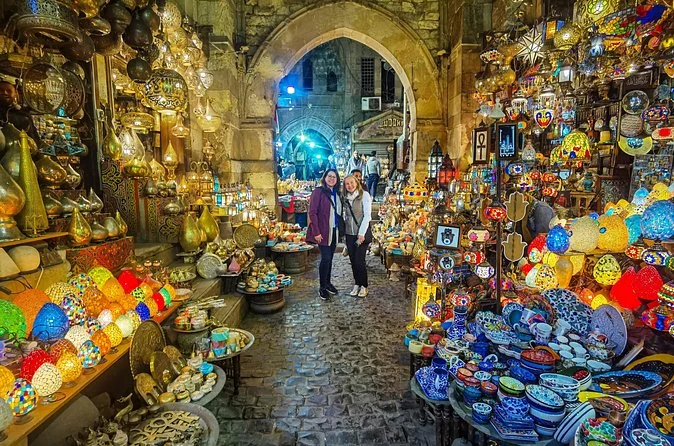
Khan el-Khalili and Al-Muizz Street
Two to three hours in the bazaar and on Al-Muizz with a local guide
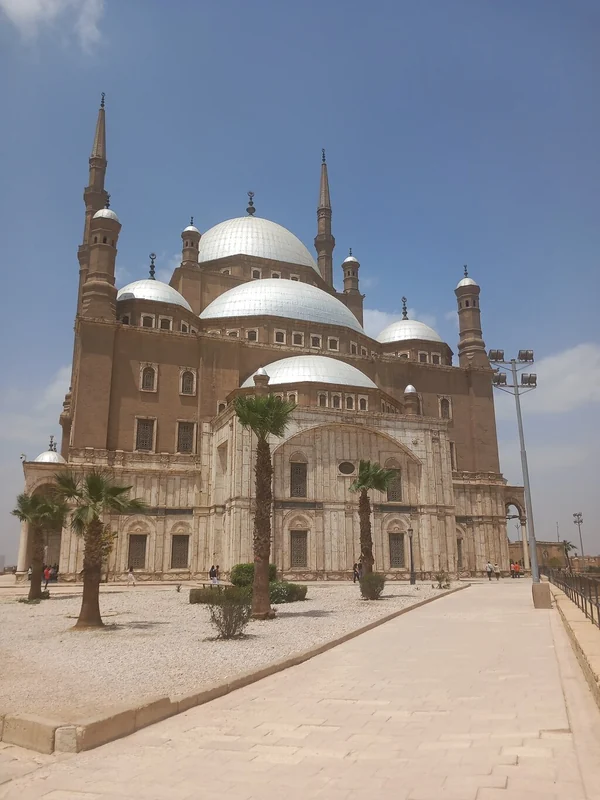
Private 4-Hour Coptic Cairo, Citadel and Khan
- Private car, driver and hotel pickup
- Egyptologist guide as an option
- Entry fees as an option