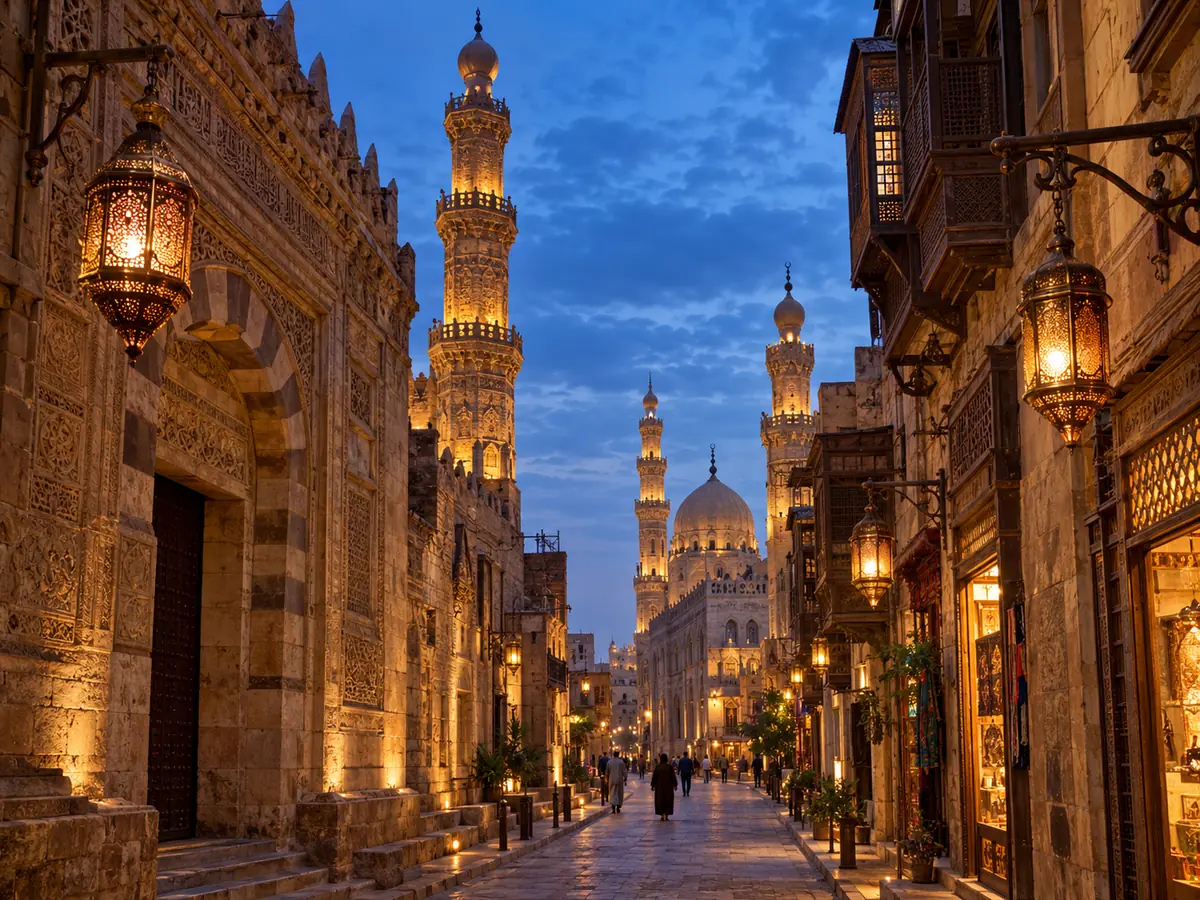
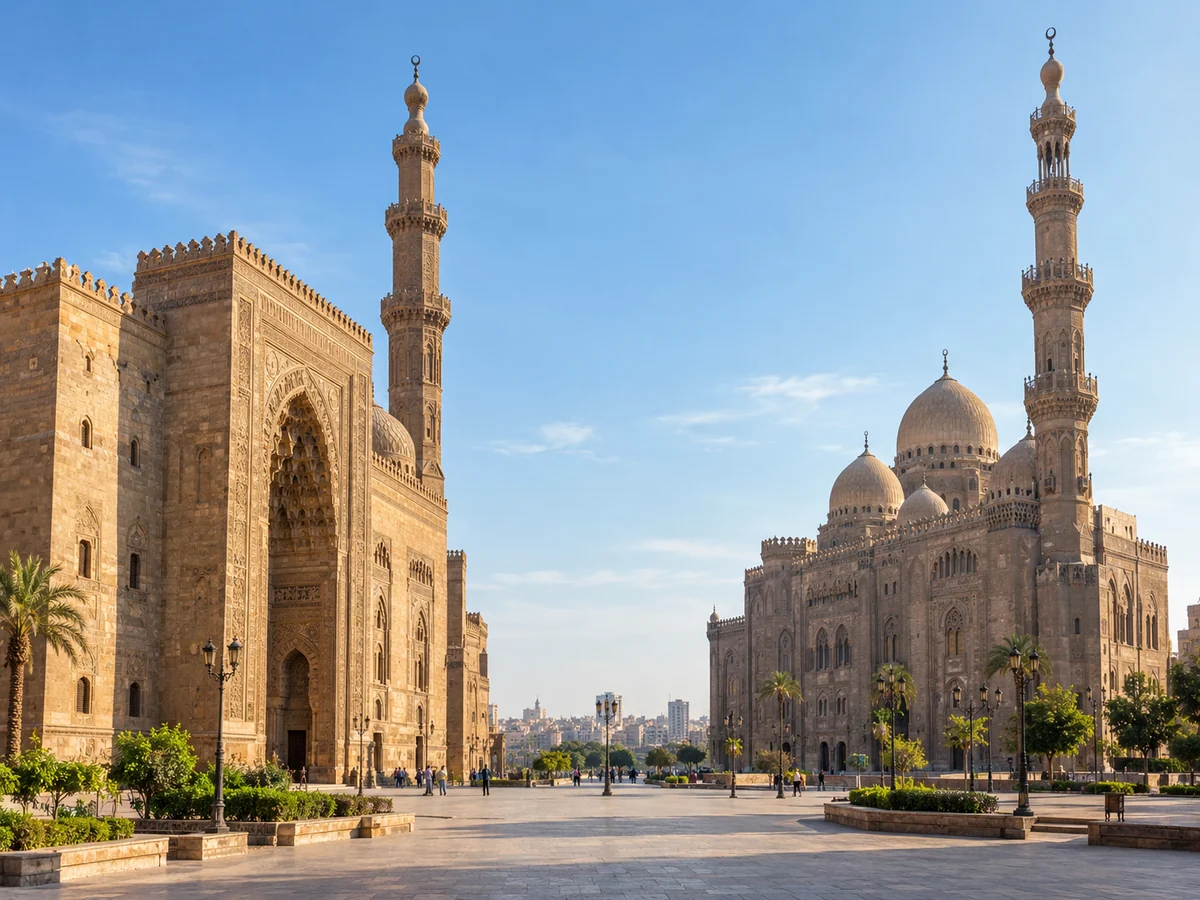
Booking choice: The Islamic Cairo walk with Al-Azhar, from $25 per person in a group. Check dates Tour details
Visiting a mosque in Cairo is simple once you know the rules. Cover your shoulders and knees, take off your shoes, and if you're a woman, cover your hair. Most big mosques lend scarves or robes to anyone who arrives underdressed, so you won't be turned away for a T-shirt. You'll just be wearing a borrowed green robe in your photos.
This guide covers what to pack, what happens at the door of the Muhammad Ali Mosque, Sultan Hassan and Al-Azhar, how the Coptic churches differ, and when mosques close to visitors.
The quick answer
Everyone covers shoulders and knees; women also cover their hair with a scarf. Shoes come off at the door, so wear socks and slip-ons and tip the shoe-keeper EGP 10 to 20. Mosques close to sightseeing during Friday noon prayer, roughly 11:30 to 13:30. Churches need modest clothes but no headscarf.
What is the dress code for Cairo mosques?
Shoulders and knees covered for everyone, nothing tight or see-through, and a headscarf for women. Shoes off before you step onto the carpet or marble.
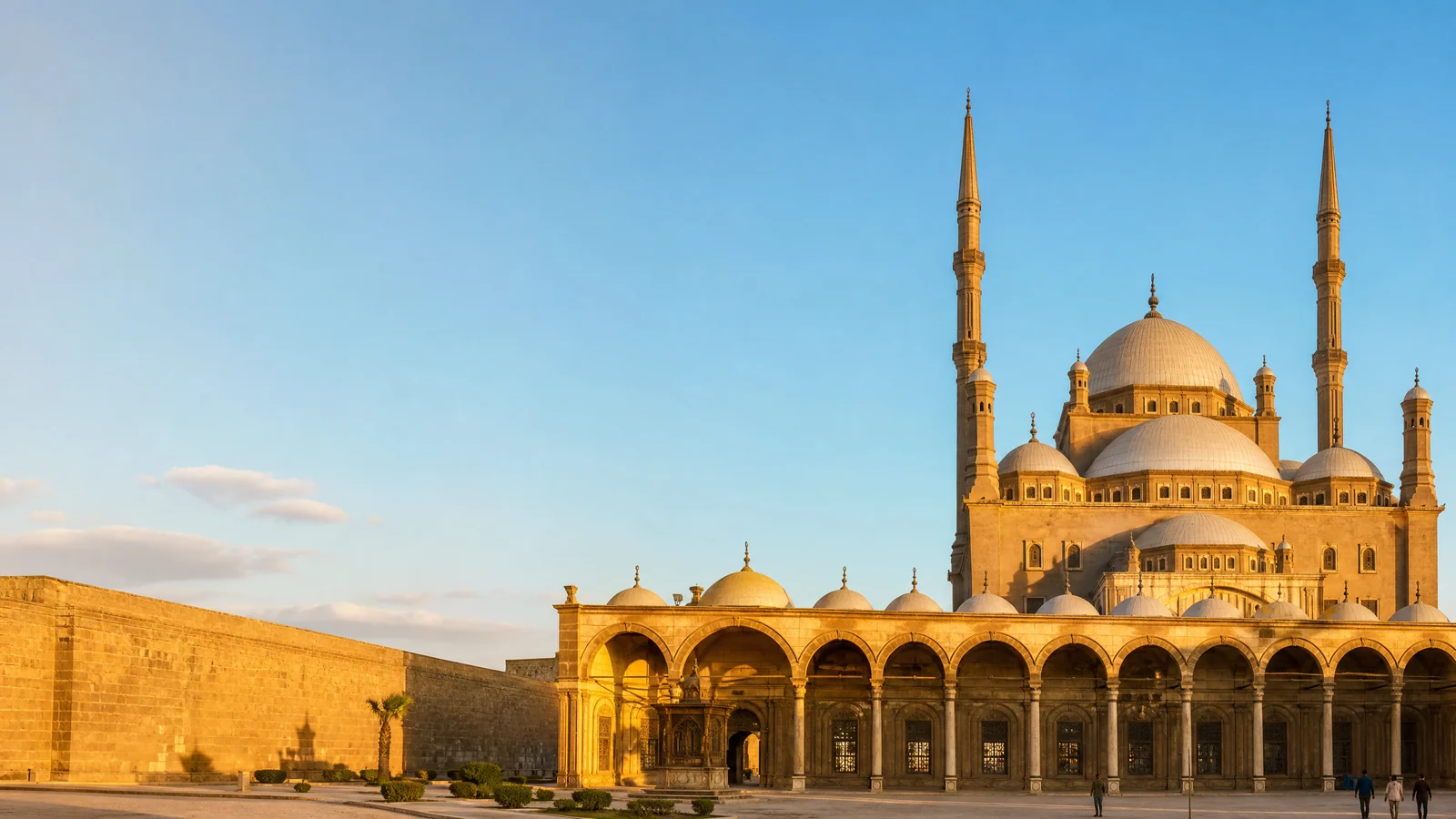
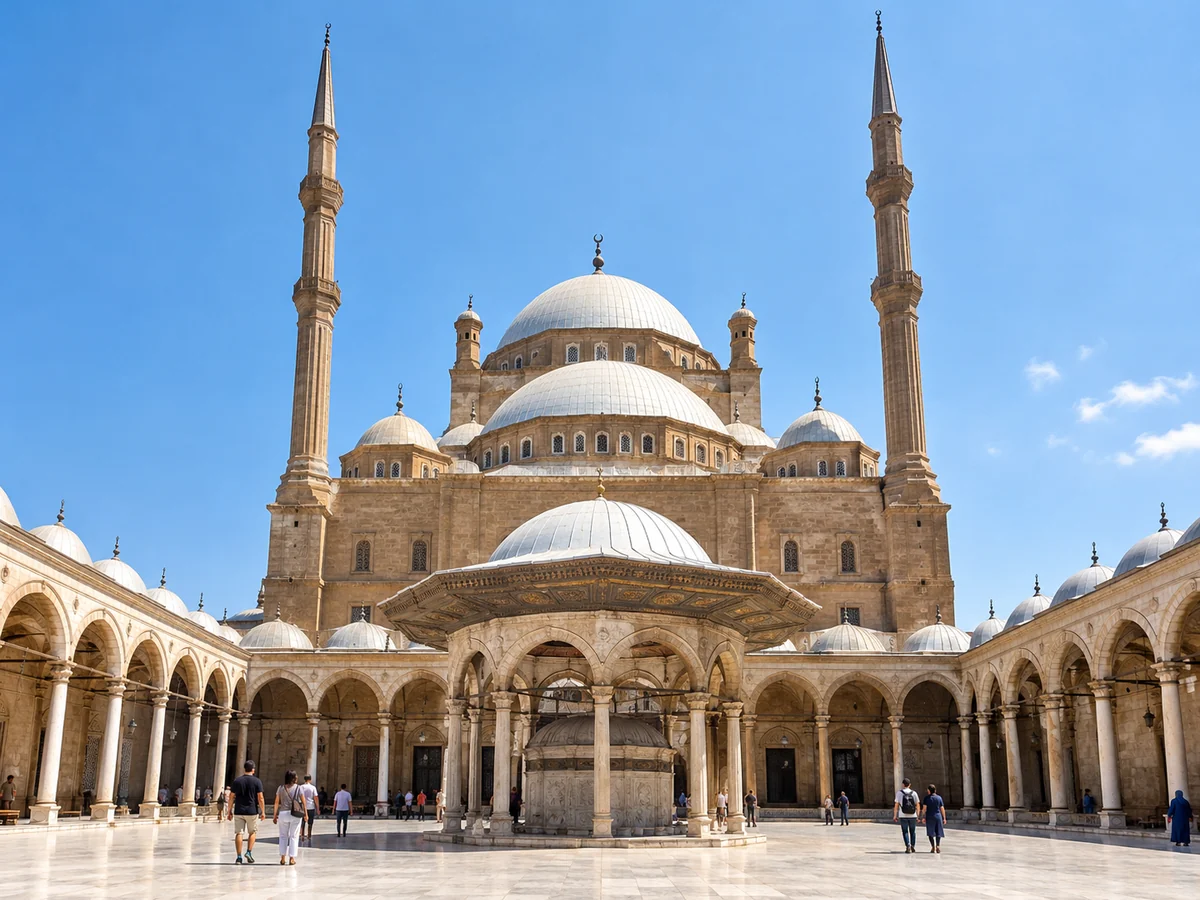
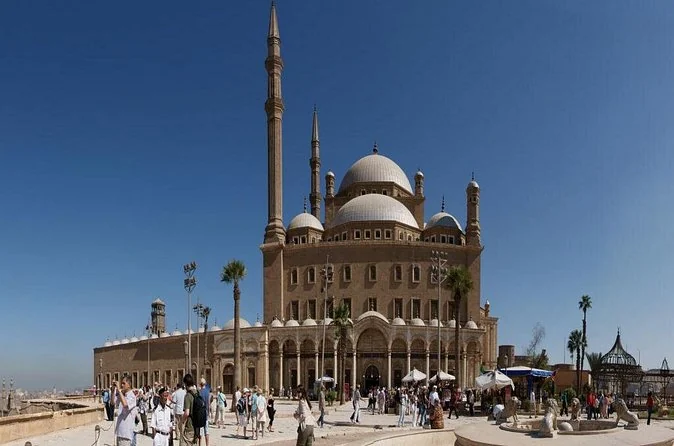
The rules are the same at the Muhammad Ali Mosque, Sultan Hassan, Al-Rifai, Al-Azhar and the Mamluk mosques on Al-Muizz. Guards at the bigger mosques check at the door. At the Muhammad Ali Mosque, visitors in shorts or sleeveless tops are handed a robe to wear over their clothes, usually green. At Al-Azhar, scarves are available at the entrance.
Dressing modestly also makes the streets of Islamic Cairo easier. You'll attract fewer comments in the bazaar in long sleeves than in a vest top.
| Men | Women | |
|---|---|---|
| Top | T-shirt or shirt, sleeves to the elbow or longer | Loose top covering shoulders and upper arms, better to the wrist |
| Bottom | Long trousers | Long skirt or loose trousers to the ankle |
| Head | Nothing needed | Scarf covering the hair (lent at big mosques) |
| Feet | Slip-on shoes and socks | Slip-on shoes and socks |
| Avoid | Shorts, vests | Shorts, short skirts, tight leggings, low necklines |
What should women wear to visit a mosque in Cairo?
A loose long skirt or trousers, a top covering the arms, and a scarf for your hair. Carry the scarf in your bag all day.
A light cotton or linen scarf is the single most useful thing to pack for Old Cairo. It covers your hair in the mosques, your shoulders in the sun, and your face when the dust blows. Drape it loosely: no one expects a perfect hijab, just hair covered while you're inside.
If you forget, you'll be lent one, or a full robe at the Muhammad Ali Mosque. Borrowed robes go over your clothes and come back at the exit. A long maxi dress with a light cardigan works all day, from the mosques to the Coptic churches to dinner.
What should men wear to Cairo mosques?
Long trousers and a shirt or T-shirt with sleeves. Men in shorts get a robe at the bigger mosques or are asked to wait outside.
Men don't need to cover their heads. Sleeveless tops and football shirts are a bad idea; a plain T-shirt is fine. Lightweight chinos or linen trousers work better in the heat than jeans. Shorts are the usual problem: guards at the Muhammad Ali Mosque hand out robes, but smaller mosques may simply say no.
A slow day on foot through medieval Cairo, ending at Al-Azhar, with a guide who knows each door's rules.
Check dates for the Islamic Cairo walk with Al-AzharDo you take your shoes off in Cairo mosques?
Yes, always. Leave them with the shoe-keeper at the door and tip EGP 10 to 20 when you collect them, or carry them in a bag.
At the Muhammad Ali Mosque, Sultan Hassan and Al-Azhar, a shoe-keeper (often an older man at a rack) minds your shoes. That small tip is normal; have EGP 10 and 20 notes ready. Some visitors carry their shoes in a cloth bag instead, soles together, which is also fine.
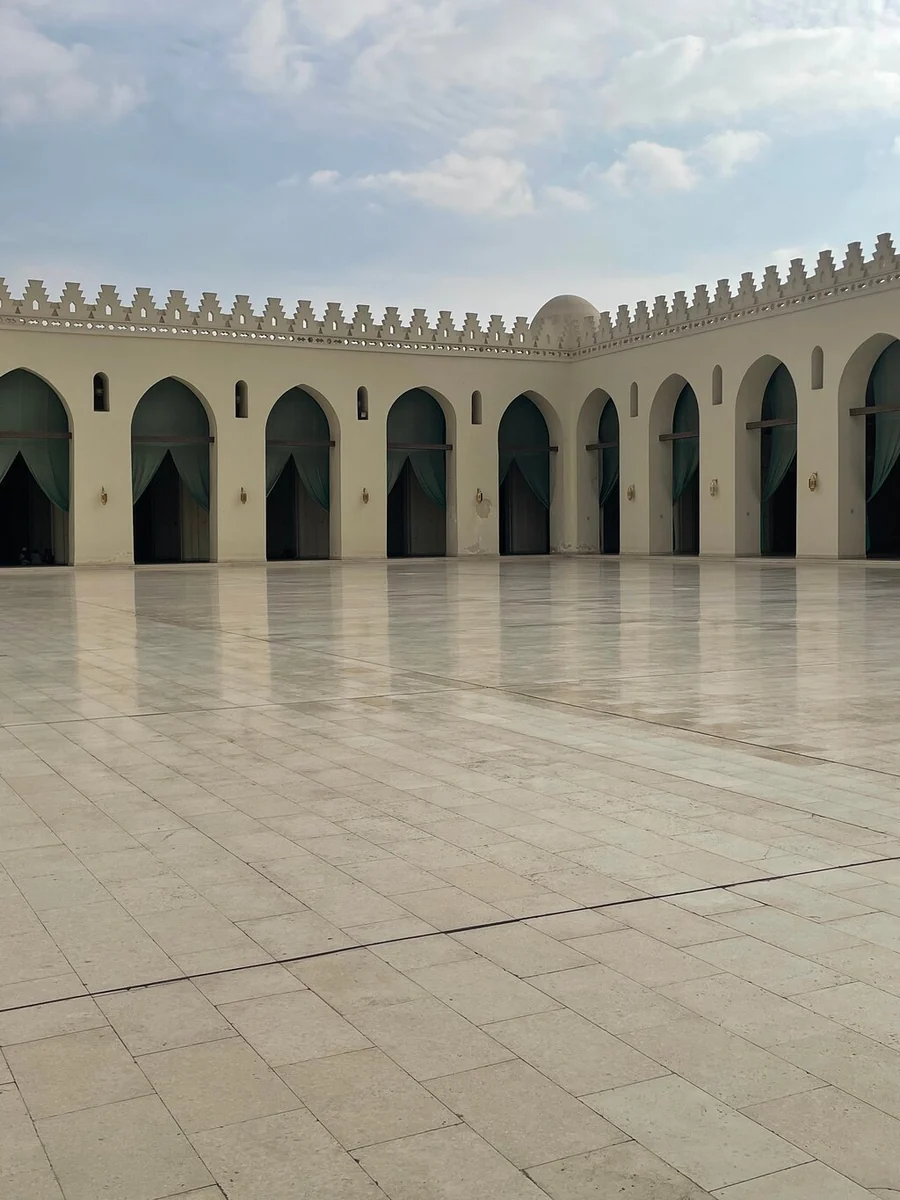
Wear socks. The marble courtyards of Al-Azhar and Sultan Hassan get hot enough in summer sun to hurt bare feet, and the carpets see thousands of visitors a day. Slip-on shoes save you a lot of lace-tying across a day with five or six mosques.
What do you wear in Coptic churches and the Ben Ezra Synagogue?
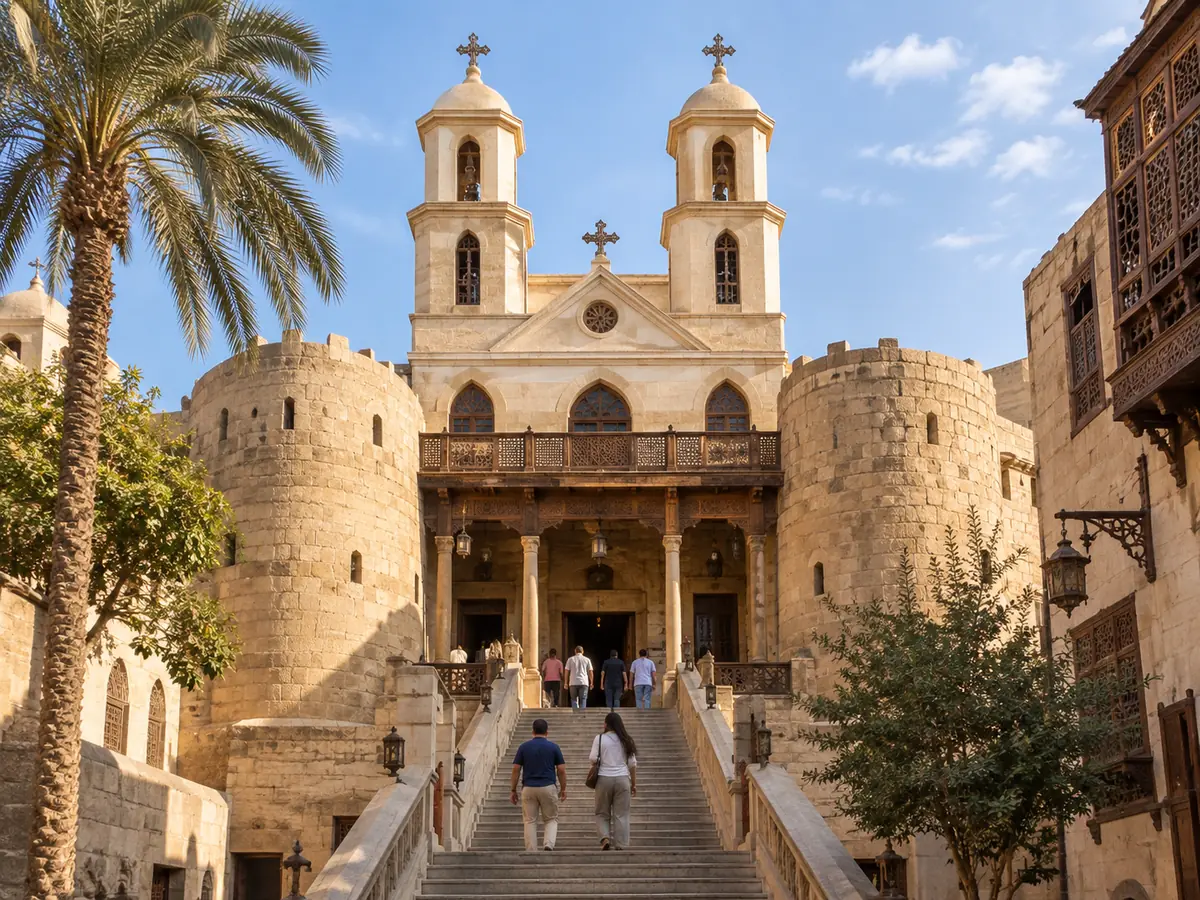
Modest clothes, shoulders and knees covered. Women don't need a headscarf in the churches, and shoes stay on.
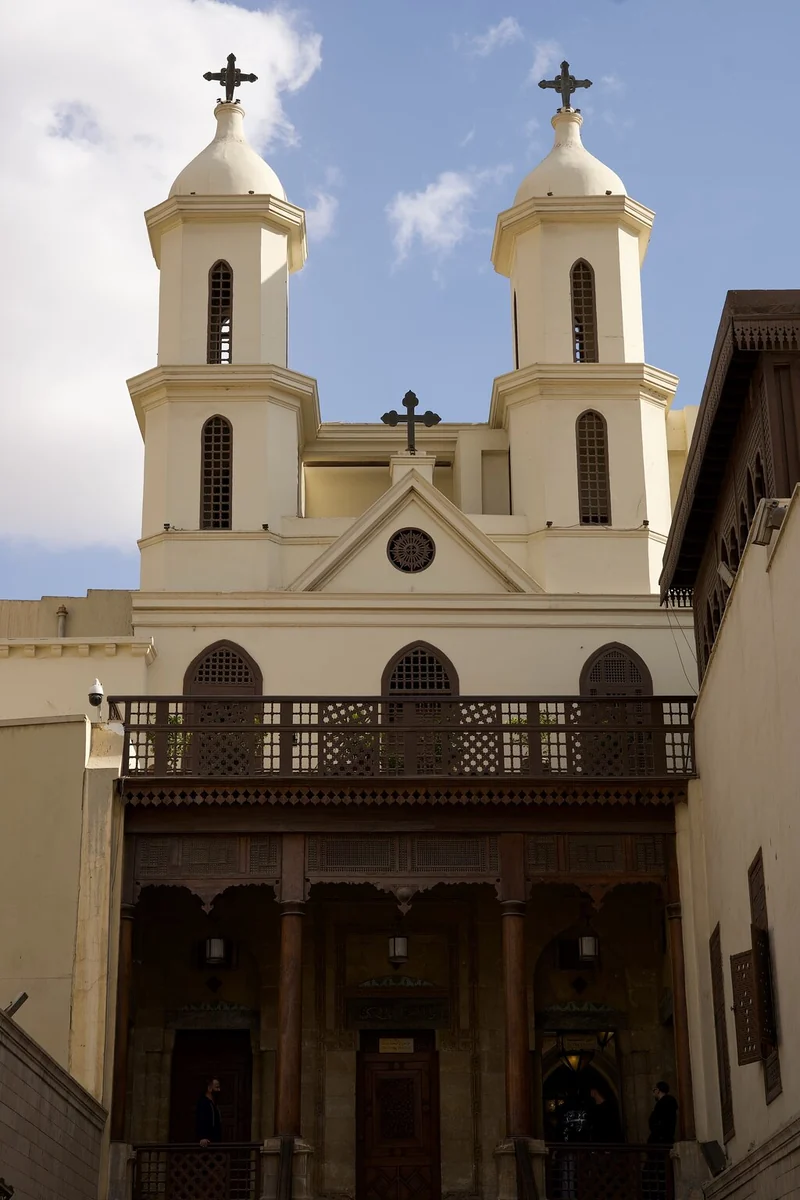
The Hanging Church, Abu Serga and St George are working churches, and some visitors come in for the liturgy on Friday and Sunday mornings. Keep voices low and don't walk around during a service. The rules at Ben Ezra are similar, and photography inside isn't allowed. The Coptic Cairo guide has hours and the metro route.
The Mosque of Amr ibn al-As, a short walk from the churches, follows mosque rules: women cover hair, everyone takes off shoes.
When are Cairo mosques closed to visitors?
During prayers, above all the Friday noon prayer, roughly 11:30 to 13:30. Visits also pause for a few minutes at each of the five daily prayers.
On Friday the big mosques fill for the main weekly prayer and sermon, and tourists are asked to stay out until it ends. Plan the Citadel walls and terraces, the Coptic churches or a long lunch for that window. Prayer times move with the sun through the year, so the other pauses shift too; your guide or a prayer-time app will know.
The Citadel is open 08:00 to 17:00, the Muhammad Ali Mosque to 16:00, and Sultan Hassan from 09:00 to 17:00. More in the Citadel tickets guide.
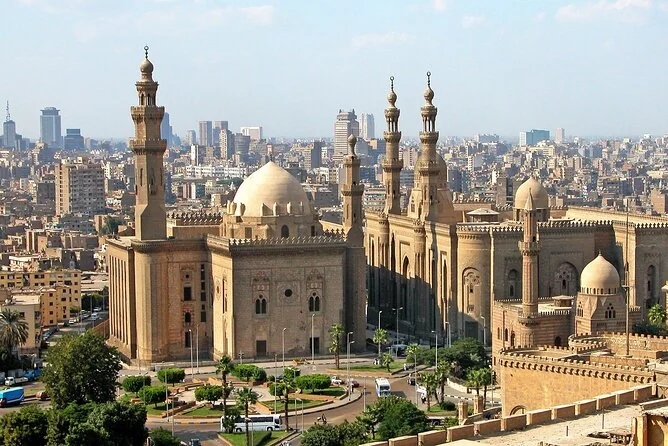
A private guide who plans the Citadel, Sultan Hassan and the Coptic churches around prayer times and traffic.
Explore the private Citadel and Old Cairo day Tour detailsWhat should you know about visiting Cairo in Ramadan 2027?
Ramadan 2027 is expected from about 8 or 9 February to 9 or 10 March, depending on the moon sighting. Monument hours get shorter, and eating in public by day is best avoided.
Tourists aren't required to fast, and hotels and many restaurants serve food during the day. Still, eating, drinking or smoking openly on the street in daylight comes across as rude, so do it discreetly. Dress a notch more conservatively than usual.
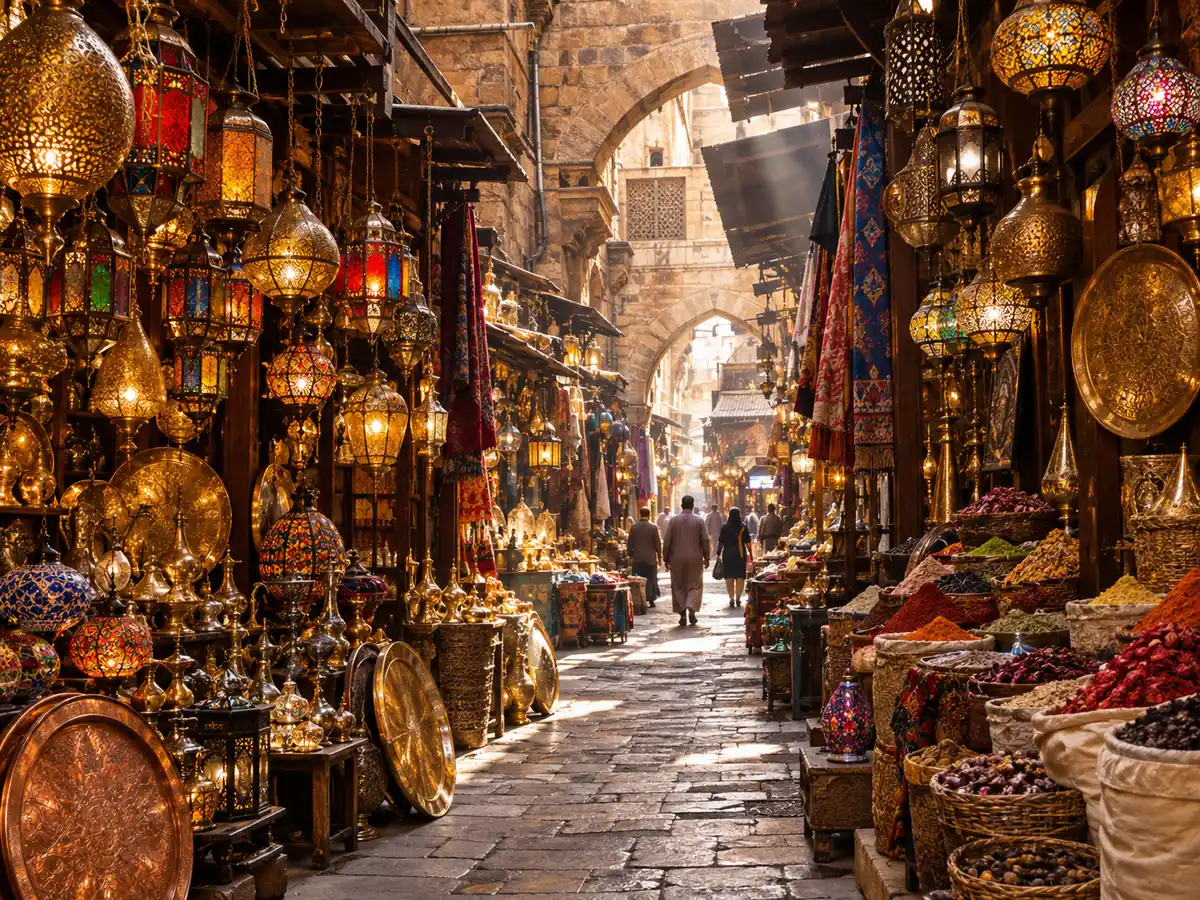
The upside is the evenings. After iftar, the sunset meal, Al-Hussein Square and Khan el-Khalili fill with families, lanterns and food stalls until late. Eid al-Fitr, expected around 10 to 11 March 2027, brings crowds and some closures. The dates are announced by Dar al-Ifta once the moon is sighted.
Can you take photos inside Cairo mosques, and what about the heat?
Personal photos without flash are fine in the big mosques; don't photograph people praying. For the heat, cover up in light, loose cotton or linen rather than stripping off.
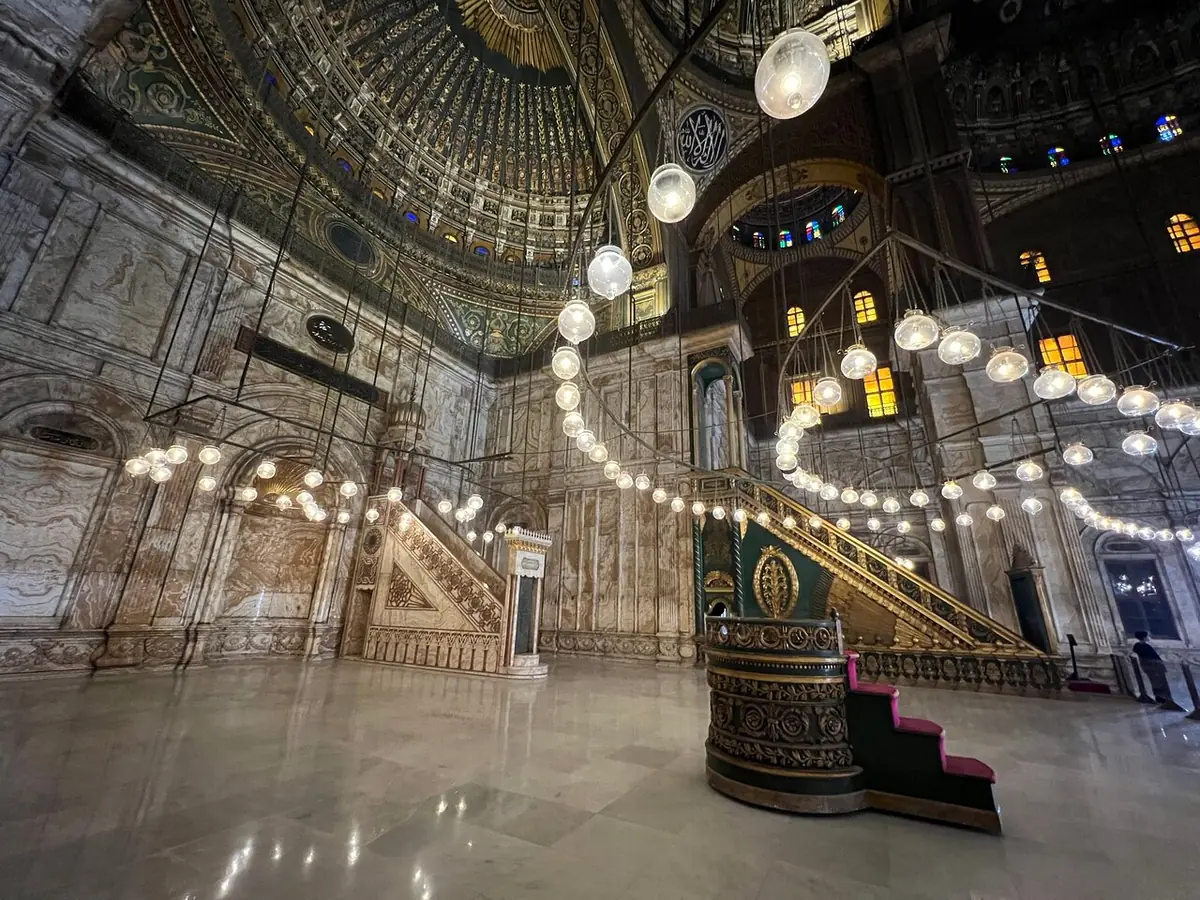
Phones and cameras are welcome at the Muhammad Ali Mosque, Sultan Hassan and Al-Azhar. Ask before photographing anyone up close. Tripods and professional kit need a permit at Egyptian monuments, and Ben Ezra bans photography altogether.
Cairo summers run hot and dry. Loose long sleeves keep the sun off better than a vest, and a scarf doubles as shade. Bring a hat for the Citadel plaza, a water bottle, sunscreen, and small notes for shoe-keepers and toilets. Start early: by 13:00 in summer the stone courtyards are glaring.
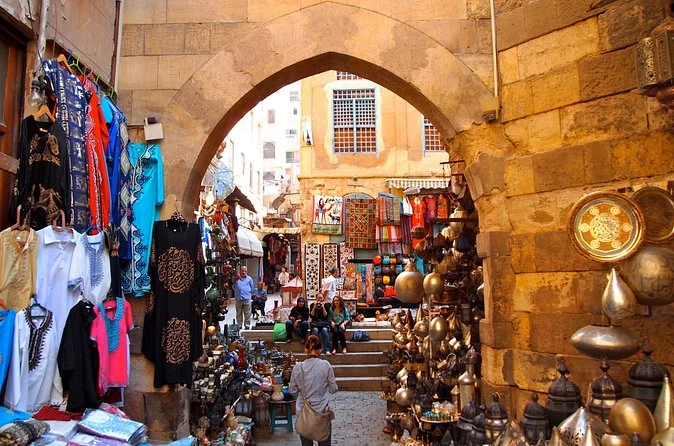
Two to three hours on Al-Muizz and in the bazaar in the cooler evening, with hotel pickup.
Check dates for the Khan el-Khalili and Al-Muizz tourFrequently asked questions
Do women have to cover their hair in Cairo mosques?
Yes. Women cover their hair inside every mosque. Big mosques like the Muhammad Ali Mosque and Al-Azhar lend scarves or robes at the door, but bringing your own is easier.
Can I wear shorts to the Muhammad Ali Mosque?
You'll be handed a robe to wear over them. Long trousers or a long skirt are easier, and smaller mosques may not let you in wearing shorts.
Do I need to cover my hair in Coptic churches?
No. Modest clothes covering shoulders and knees are enough in the Hanging Church, Abu Serga and the other Coptic churches.
How much should I tip the shoe-keeper?
EGP 10 to 20 per visit is normal. Have small notes ready, since change is often scarce.
Ready to book
Choose your tour
Free cancellation up to 24 hours before on every option. Private tours are priced per person by group size: enter your party size on Viator to see your price.
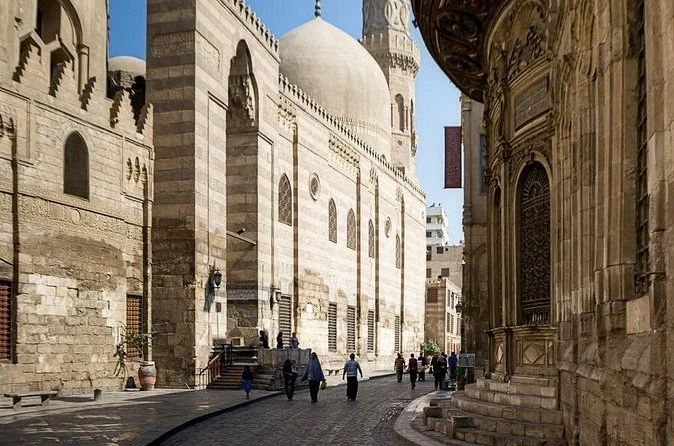
Islamic Cairo Walk with Al-Azhar Mosque
A slow day on foot through medieval Cairo, ending at Al-Azhar
Private Citadel, Coptic and Islamic Cairo Day
- Private guide and car, Cairo or Giza pickup
- Entry fees as an option
- Lunch as an option
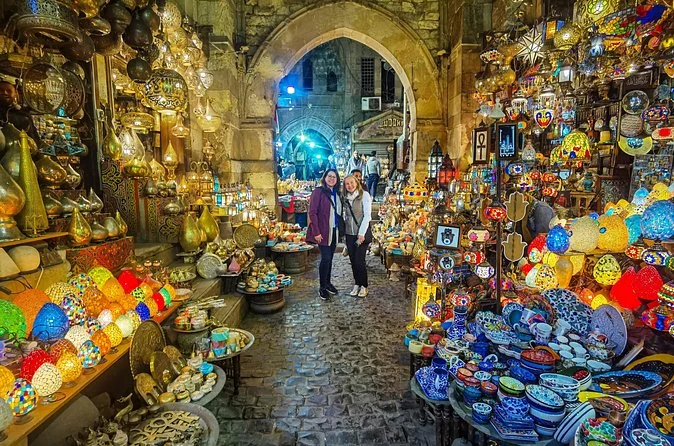
Khan el-Khalili and Al-Muizz Street
Two to three hours in the bazaar and on Al-Muizz with a local guide